
Why Colour Coding is Essential in the Cleaning Industry
Colour coding is one of the most effective systems used in modern cleaning. Importantly, it helps cleaning teams maintain high hygiene standards, prevent cross-contamination, and deliver consistent results across all environments.
At Pioneer FM, we apply colour-coded cleaning systems across every site to ensure safe and compliant service delivery.
Preventing Cross-Contamination
CCross-contamination is one of the biggest risks in cleaning. For example, using the same cloth in multiple areas can spread harmful bacteria quickly.
Colour coding eliminates this risk because cleaning teams assign specific tools to specific areas. As a result, operatives avoid using contaminated equipment in the wrong environments, which protects both people and spaces.
Improving Training and Efficiency
Colour coding also makes training faster and more effective. In addition, it provides a simple visual system that every team member can understand.
- Staff quickly recognise which tools to use
- Supervisors easily monitor compliance
- Teams work more efficiently across sites
Because of this, businesses reduce errors and improve overall service quality.
Supporting Health, Safety and Compliance
MaIn many industries, strict hygiene standards are essential. Therefore, colour coding plays a key role in maintaining compliance.
We utilise colour-coded cleaning systems to prevent cross-contamination, particularly in high-risk environments such as washrooms. This approach ensures that teams follow clear processes and maintain safe working practices at all times.
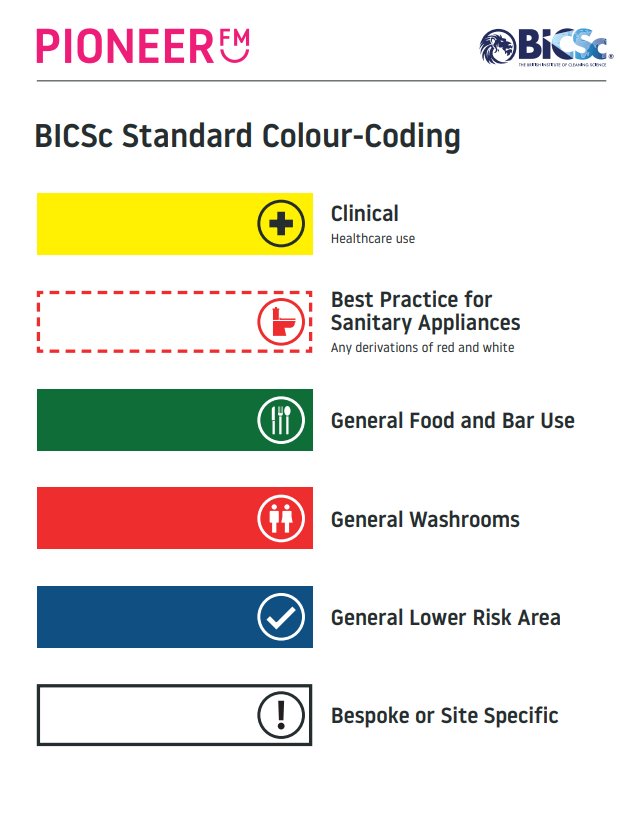
Standard Colour Coding System
WMost cleaning environments follow a widely recognised colour coding structure:
- Red: Toilets, urinals, and high-risk washroom areas
- Yellow: Washroom surfaces such as sinks and mirrors
- Blue: General low-risk areas such as offices and corridors
- Green: Kitchens and food preparation areas
This system ensures clear separation between different hygiene risk levels.
Enhancing Professionalism and Client Confidence
A structured colour coding system demonstrates professionalism and attention to detail.
- Clients can visibly see safe cleaning practices
- Standards are consistent across all locations
- Accountability is built into operations
It’s a simple system that signals a high-quality, well-managed service.
Reducing Costs and Waste
Colour coding also improves how cleaning services are perceived. For instance, clients can clearly see structured and professional cleaning practices in place.
As a result:
- Clients gain confidence in service delivery
- Standards remain consistent across all sites
- Teams operate with clear accountability
It’s a small system with a big impact on both performance and cost control.
Reducing Costs and Waste
In addition, colour coding supports efficiency and cost control.
- Teams use equipment correctly, so it lasts longer
- Fewer mistakes reduce the need for re-cleaning
- Businesses minimise unnecessary waste
Because of this, organisations benefit from both improved performance and reduced costs.
Conclusion
Colour coding is a simple system, but it delivers significant impact. However, it only works when teams apply it consistently and correctly.
At Pioneer FM, our teams follow strict colour coding procedures on every site. We support defence, government, and high-security sites as part of our sustainable facilities management services across the UK.
Get a cleaning quote from Pioneer FM and discover how our compliant, fully managed services can support your organisation.